Leeds United isn’t just a football club—it’s a legacy carved in passion, triumph, and resilience. From glory days at Elland Road to battling back through the divisions, this club has shaped English football history with grit and glory.
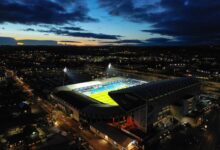
Leeds United’s Glorious Origins and Founding Legacy

Established in 1919, Leeds United emerged from the ashes of Leeds City FC, which was disbanded due to financial misconduct during World War I. The Football League needed a new team to represent the city, and thus, Leeds United was born—ushering in a new era of Yorkshire pride on the pitch.
The Birth of a Football Institution
The formation of Leeds United was more than just administrative reshuffling; it was a community’s response to losing its team. Local businessmen and supporters rallied to create a club that would embody the spirit of Leeds. The name ‘United’ was chosen to symbolize unity across the city’s diverse districts.
- Founded on October 17, 1919
- Replaced Leeds City FC after its expulsion
- First match: 1–0 win over Port Vale in 1920
The early years were modest, with the club spending over three decades in the Second Division before breaking through under visionary management.
Early Struggles and Regional Identity
For much of the 20th century, Leeds United was seen as a provincial club without major silverware. However, their consistent presence in the Football League laid the groundwork for future success. The club cultivated a loyal fanbase, deeply rooted in the working-class communities of West Yorkshire.
“Leeds United is more than a team—it’s the heartbeat of a city.” — Fans’ chant at Elland Road
Their green and white colors became synonymous with local pride, and the chant “Marching On Together” began echoing through the terraces long before it became official.
Leeds United’s Golden Era: The Don Revie Revolution
No discussion of Leeds United is complete without mentioning Don Revie, the architect of the club’s most successful period. Appointed manager in 1961, Revie transformed a mid-table side into a dominant force in English and European football.
Building a Winning Machine
Revie instilled discipline, tactical intelligence, and a relentless work ethic. He developed a system based on fitness, pressing, and positional awareness—innovative for its time. Players like Billy Bremner, Johnny Giles, and Jack Charlton became legends under his leadership.
- Won First Division title in 1968–69 and 1973–74
- FA Cup victory in 1972
- League Cup win in 1968
The 1968 League Cup triumph was the club’s first major trophy, signaling the arrival of a new powerhouse.
European Glory and Controversial Reputation
Leeds United reached two European Cup finals (1975 and 1968 Inter-Cities Fairs Cup) and won the latter—now recognized as the precursor to the UEFA Cup. Their 1975 European Cup final loss to Bayern Munich remains a painful memory for fans.
However, the team’s aggressive style earned them a controversial reputation. Dubbed “Dirty Leeds” by the press, they were accused of gamesmanship and physical play. Yet, this toughness was part of their identity—a reflection of northern grit.
“We weren’t dirty—we were determined.” — Billy Bremner
Despite criticism, their achievements were undeniable: five major trophies in the 1960s and 70s, and a legacy that redefined professionalism in English football.
Leeds United’s Decline and Relegation Turmoil
After Revie’s departure in 1974 to manage England, the club entered a period of instability. The loss of their visionary leader, combined with aging stars and poor recruitment, led to a slow but steady decline.
The Fall from Grace
Throughout the 1980s, Leeds United drifted between divisions. They were relegated to the Second Division in 1982 and spent years struggling to regain top-flight status. Mismanagement, financial issues, and lack of clear direction plagued the club.
- Relegated in 1982 after 16 consecutive top-division seasons
- Failed to promote in 1986 and 1987 playoffs
- Reached 1987 Simod Cup final but lost to Arsenal
The absence of success bred frustration among fans, and Elland Road, once a fortress, saw dwindling attendance and fading hope.
The Howard Wilkinson Redemption
Enter Howard Wilkinson, appointed in 1988. A methodical and disciplined manager, Wilkinson rebuilt the squad with a focus on youth development and tactical cohesion. His efforts culminated in the 1990 First Division title—the last before the Premier League era.
This triumph was historic: Leeds became champions of England for the third time, defeating Manchester United on the final day. Wilkinson also prioritized the academy, laying foundations for future generations.
“We did it the right way—with hard work and belief.” — Howard Wilkinson
Despite this high, the club failed to sustain success in the Premier League, eventually being relegated in 1992—just one season after winning the league.
Leeds United in the Premier League: Boom and Bust
The late 1990s and early 2000s saw Leeds United return to prominence under David O’Leary. With a young, exciting squad, they became one of Europe’s most feared teams—before financial collapse brought everything crashing down.
The Youth Revolution and European Nights
O’Leary’s team, dubbed “the Baby-faced Assassin” for his youthful appearance, fielded homegrown talents like Harry Kewell, Mark Viduka, and Alan Smith. They reached the UEFA Champions League semi-finals in 2001, defeating giants like Lazio and AC Milan along the way.
- Champions League semi-finalists: 2001
- FA Cup finalists: 1996 and 2000
- League Cup winners: 1990
Matches at Elland Road during this era were electric, with fans dreaming of European glory. The club’s aggressive transfer policy brought in stars like Rio Ferdinand and Robbie Keane.
Financial Collapse and Relegation
Behind the scenes, Leeds United was spending beyond its means. Heavy investments in transfers and wages, fueled by anticipated Champions League revenue, backfired when the team failed to qualify consistently. By 2002, the club was in financial crisis.
Forced to sell key players, Leeds plummeted down the table and were relegated in 2004. The fall was swift and brutal—from European contenders to League One in just five years.
“We were living on borrowed time.” — David O’Leary
This period remains a cautionary tale in football finance and mismanagement.
Leeds United’s Fight for Survival: From League One to Promotion
The 2007–2010 era was the darkest in Leeds United’s history. Relegated to League One for the first time, the club faced existential threats. Yet, fan loyalty never wavered, and a phoenix-like rise began.
Rebuilding in the Third Tier
Under managers like Gary McAllister and Simon Grayson, Leeds stabilized. Promotion back to the Championship was achieved in 2010, thanks to a resilient squad and passionate support. The playoff final victory over Exeter City at Wembley was a turning point.
- First season in League One: 2007–08
- Won promotion in 2010 via playoffs
- Record attendance in League One: over 37,000 at Elland Road
The fanbase, organized through groups like the Leeds United Supporters’ Trust, played a crucial role in maintaining morale and club identity.
Ownership Changes and Fan Activism
Ownership under Ken Bates brought mixed results. While he oversaw promotion, his tenure was marred by controversy, including legal disputes and fan unrest. The rise of Massimo Cellino in 2014 brought instability, with frequent managerial changes.
Yet, fan activism kept the club grounded. Protests, petitions, and community initiatives ensured that Leeds United remained a people’s club, not just a business venture.
“We’ll follow you through the good and the bad.” — Chorus of “Marching On Together”
This unity became the bedrock of the club’s eventual resurgence.
Leeds United’s Premier League Return: Marcelo Bielsa’s Miracle
The appointment of Marcelo Bielsa in 2018 marked a turning point. The eccentric Argentine brought a revolutionary style of play—high pressing, intense fitness, and attacking flair. His impact was immediate and transformative.
Bielsa’s Tactical Revolution
Bielsa demanded extreme physical and mental commitment. Training sessions were grueling, but players bought into his philosophy. The team played a 3-3-1-3 formation, dominating games with relentless energy.
- Unbeaten in 20 league games during 2019–20 season
- Won Championship in 2019–20 with 93 points
- Bielsa named LMA Manager of the Year in 2020
His meticulous preparation—scouting reports, video analysis, and even measuring pitch dimensions—earned him cult status.
Promotion and Premier League Survival
After 16 years, Leeds United returned to the Premier League in 2020. The celebration at Elland Road was euphoric. In the top flight, they avoided relegation in their first season, finishing 9th—a remarkable achievement.
Bielsa’s influence extended beyond results; he restored pride and identity. Players like Kalvin Phillips, Patrick Bamford, and Raphinha became household names.
“He didn’t just change how we play—he changed who we are.” — Leeds fan after promotion
Though Bielsa was sacked in 2022 after a difficult season, his legacy endures as the man who brought Leeds back.
Leeds United Today: Challenges, Identity, and Future Vision
As of 2024, Leeds United continues to navigate the complexities of modern football. Relegated back to the Championship in 2023, the club is rebuilding under new management and ownership structures.
Post-Bielsa Transition and Relegation
After Bielsa’s departure, Leeds struggled under Jesse Marsch and later under temporary bosses. Poor form, defensive fragility, and squad imbalance led to relegation in 2023. However, the club retained key assets and avoided financial fire sales.
- Relegated in May 2023 after three seasons in Premier League
- Appointed Javi Gracia, then later managed by interim coaches
- Focus on youth integration in 2023–24 season
The return to the Championship reignited the promotion race, with fans demanding a swift return to the top flight.
Ownership and Strategic Direction
49ers Enterprises, the American-based ownership group, has taken a more active role. Their long-term vision includes stadium expansion, improved youth facilities, and sustainable growth.
Investments in the Thorp Arch training complex and digital fan engagement show a commitment to modernization while respecting tradition.
“Our goal is to build a club that competes at the highest level—for decades.” — 49ers Enterprises statement
The balance between ambition and financial prudence will define Leeds United’s next chapter.
When was Leeds United founded?
Leeds United was founded on October 17, 1919, replacing the disbanded Leeds City FC.
Who is the most iconic Leeds United manager?
Don Revie is widely regarded as the most iconic manager, leading the club to its greatest successes in the 1960s and 70s.
Did Leeds United win the Premier League?
No, Leeds United has never won the Premier League. Their last league title was in 1992, before the Premier League era began.
Why was Leeds United relegated in 2023?
Leeds United were relegated in 2023 due to poor form, defensive weaknesses, managerial instability, and failure to adapt to Premier League tactics after Bielsa’s departure.
Where do Leeds United play their home games?
Leeds United play their home games at Elland Road, a stadium with a capacity of over 37,000 located in Leeds, West Yorkshire.
Leeds United’s story is one of triumph, tragedy, and unyielding resilience. From Don Revie’s golden era to Bielsa’s miraculous promotion, the club has weathered every storm. Though currently in the Championship, the spirit of Elland Road burns bright. With a loyal fanbase, strategic ownership, and a rich history, Leeds United remains a force defined not just by trophies, but by heart. The journey continues—marching on, together.
Further Reading:
